
Jonathan Harker is shaving when he feels a hand on his shoulder. Count Dracula is standing right behind him. Harker knows this because he can hear his host speaking. Yet the shaving mirror shows only one man in the room.
It is a wonderfully small scare. Bram Stoker could have introduced his vampire with a mouthful of bloody teeth. Instead, he takes an ordinary experience, glancing in a mirror to see who is behind you, and makes it go wrong. More than a century later, you can still picture exactly how that would feel.
The history of vampire fiction is full of moments like this. A stranger comes to stay. A new pupil takes the desk beside yours. Someone across a table offers to tell you the story of his life. Each encounter begins with something familiar, which makes the discovery of who is keeping you company all the more unsettling.
So how did we get from the count in the castle to romantic vampires, science-fiction vampires and the blood-drinking clans of modern South London? The story starts before Dracula ever looked over Jonathan Harker’s shoulder.
Vampire fiction before Dracula
In 1819, John Polidori published The Vampyre. Its central figure, Lord Ruthven, has an advantage that puts a set of sharp teeth to shame. People want to invite him to dinner.
Ruthven moves through fashionable society, where his air of mystery attracts attention and his social standing gives him access to potential victims. It is easy to see why this version of the vampire lasted. A creature scratching at the shutters has to find a way indoors. A charming aristocrat can have his coat taken and a place laid for supper. Explore the early Gothic stories that influenced Dracula at the Bram Stoker Estate. www.bramstokerestate.com
Then came a vampire whose arrival feels like the answer to a wish. In Sheridan Le Fanu’s Carmilla, published in book form in 1872, young Laura lives with her father in an isolated castle. After a carriage accident nearby, a mysterious girl comes to stay. Imagine Laura’s delight. At last, there is somebody her own age to talk to. Somebody who looks for her when she enters a room. Somebody who seems to have been waiting for her, too. Read Carmilla free at Project Gutenberg. www.gutenberg.org
That loneliness explains why Carmilla can still get under your skin even when you know exactly what sort of book you have picked up. As readers, we can see reasons to be suspicious. We can also see what it would cost Laura to give up the friendship. Her attraction to Carmilla gives this early work of queer Gothic fiction an emotional pull that survives every spoiler on the back cover.
It is also a good first choice if you want to try a classic vampire story over a weekend. You can even read the free ebook on your phone or laptop.
What made Bram Stoker’s Dracula different?
One of the pleasures of reading Dracula for the first time is discovering just how much paperwork there is. The most famous vampire in fiction needs a solicitor because he wants to buy property in England. Jonathan Harker travels to Transylvania on business, carrying the expertise that will help the Count move into the very society he threatens. Evil has found a perfectly respectable way to get the keys. Explore the British Library’s guide to Bram Stoker’s Dracula. www.britishlibrary.cn
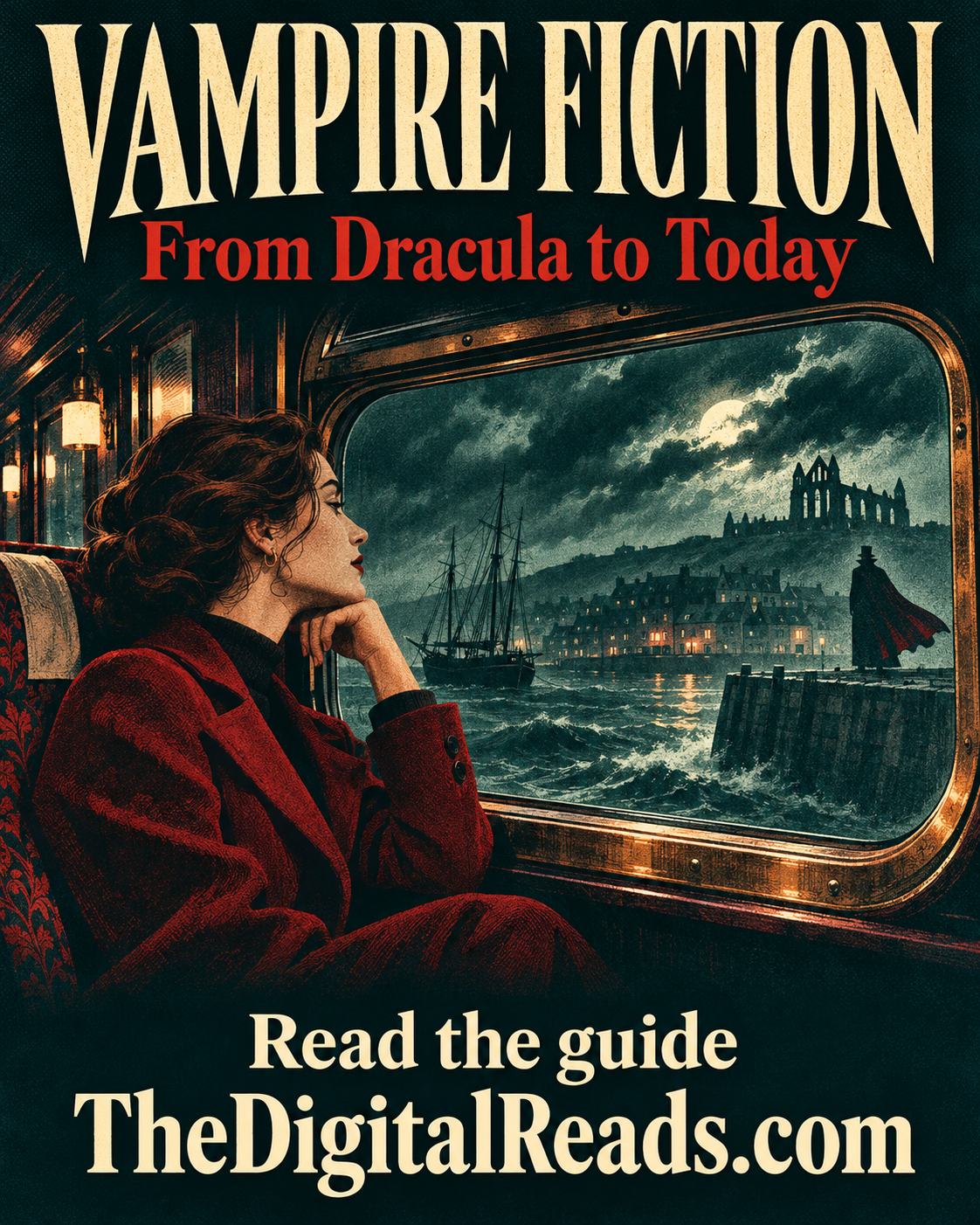
The voyage to Whitby is where Stoker does something especially clever. Seen from shore, the arrival of a ship in a storm is a public spectacle. People gather to watch. But the captain’s log gives the reader a second view of that same ship. We know what it felt like to be out at sea as the crew dwindled and the remaining men had fewer and fewer places to search. By the time the vessel reaches harbour, we know more than the people waiting on the pier. It is an awful advantage to have.
There is another surprise for anyone expecting only candlelight and superstition. Mina’s ability to organise information matters enormously. One person has a diary. Another has a letter. Someone else knows when an event took place. Mina helps turn scattered experiences into a record the group can use. If you enjoy a mystery that lets you inspect the evidence alongside the investigators, Dracula has more to offer you than its reputation might suggest. Read Bram Stoker’s Dracula at Project Gutenberg.
Anne Rice hands the microphone to the vampire
Imagine finishing Dracula and discovering a final envelope tucked into the back. Inside is the Count’s account of everything that happened. Would you believe him? Would you want to?
That is part of the pleasure Anne Rice offers in Interview with the Vampire (1976). A reporter sits down with Louis, who recounts his life as a vampire, including his relationship with Lestat and his years in New Orleans. Louis has a voice, a memory and plenty of time to explain himself. The people he has fed on have rather less opportunity to give their version. Discover Interview with the Vampire on Anne Rice’s official website. www.annerice.com
The character who makes immortality feel cruellest is Claudia. Her experience and intelligence can grow for decades while her body remains that of a small child. Imagine strangers addressing every question to the adult standing beside you. Now imagine having lived longer than that adult. Through Claudia, Rice finds a consequence of eternal youth that a handsome, permanently youthful vampire might never have cause to mention.
For a book club, there is a particularly good question here. If the reporter could interview just one other character after hearing Louis, whose account would you most want to hear?
The Gilda Stories asks what a vampire owes the living
Jewelle Gomez takes immortality in another direction in The Gilda Stories, first published in 1991. Its protagonist escapes slavery in nineteenth-century Louisiana, becomes a vampire and searches for somewhere to belong. Her story spans two hundred years, reaching from 1850 to 2050. Explore The Gilda Stories at City Lights. citylights.com
What makes Gilda such an interesting companion is the care she brings to a fundamentally unequal exchange. She needs blood from other people. Her choices about how to take it, what harm she might cause and what she might give back become part of the daily work of staying alive. Immortality also gives her time to discover what happens after a dramatic escape or an apparent happy ending. Where do you live next? Who becomes family? What do you carry into a new century when the people around you have begun to forget the last one?
If your favourite parts of vampire stories concern friendship, queer identity or the families people build for themselves, Gilda is a rewarding character to meet.
Twilight and Fledgling gave the same year two very different vampires
In 2005, Stephenie Meyer published Twilight. Bella Swan moves to Forks, Washington, where Edward Cullen appears to find sitting near her almost unbearable. Before Bella knows his secret, she faces a recognisably teenage problem. What could you possibly have done to make someone react that badly to sharing a desk? The embarrassment feels real, and that gives the supernatural explanation somewhere to land. Explore Stephenie Meyer’s Twilight at Little, Brown. www.littlebrownlibrary.com
For readers drawn to Bella and Edward, the wait is part of the appeal. Every conversation gives Bella a little more information and another reason to seek Edward out. If that gradual change in what two people mean to each other is the part you enjoy, try TheDigitalReads’ guide to slow-burn romance. If you want a wider supernatural world around the relationship, explore what romantasy offers readers.
That same year, Octavia E. Butler published Fledgling. Its protagonist, Shori, appears to be a young girl and has lost her memory. She discovers that she is a genetically modified, 53-year-old vampire. It is a brilliant premise for a reader who likes to work things out. Shori has to learn what her body needs while deciding whether to trust people who understand those needs better than she does. Read about Fledgling on Octavia E. Butler’s official site. www.octaviabutler.com
Read the two openings together and you can see how much the viewpoint matters. Bella wants to know why somebody else is behaving strangely. Shori has to explain herself to herself. Both books put an alarming encounter near the beginning, yet they leave you turning the pages for quite different reasons.
Vampire fiction today, from Blackfeet history to South London
If you enjoyed piecing together the documents in Dracula, a recent vampire novel makes an especially interesting companion. Stephen Graham Jones’s The Buffalo Hunter Hunter (2025) begins with the discovery of a Lutheran pastor’s diary from 1912. It contains testimony from Good Stab, a Blackfeet man whose account leads back to a massacre. The identity of the person writing down the story matters almost as much as that of the person telling it. What gets preserved when one man’s words survive in another man’s handwriting? Explore The Buffalo Hunter Hunter at Simon & Schuster. www.simonandschuster.net
For a very different evening, try Ben Shepherd’s Blood Drunk (2026). Freddie Burns wants to take over his family’s South London crime empire. Then he discovers vampire clans operating in the city and lands at a distinctly grubby school of magic. Freddie already understands territory, grudges and the importance of a family name. The fun lies in watching someone who thinks he knows his own patch discover an entire layer of London where that knowledge takes him only so far. Discover Blood Drunk at Pan Macmillan. www.panmacmillan.com
Put Freddie beside Jonathan Harker and there is a lovely connection across the years. Both men think they understand the business they have walked into. Both have badly underestimated the people who own the property.
Which vampire book should you read first?
If you’re in the mood for…Start withWhy pick it up?A short Gothic classicCarmilla by Sheridan Le FanuA welcome house guest gives a lonely young woman reasons to doubt her own judgement.A mystery told through evidenceDracula by Bram StokerDiaries, letters and a ship’s log let you piece the danger together.An intimate, morally complicated confessionInterview with the Vampire by Anne RiceLouis has had a lifetime to consider his actions. You get to decide how persuasive he is.Queer fiction about family and belongingThe Gilda Stories by Jewelle GomezTwo centuries give Gilda time to discover what she owes the people who sustain her.A young adult paranormal romanceTwilight by Stephenie MeyerThe tension starts with the person sitting at the next desk.Science fiction with a mysteryFledgling by Octavia E. ButlerA survivor must understand her own biology while piecing together an attack.Historical horrorThe Buffalo Hunter Hunter by Stephen Graham JonesA recovered diary opens a difficult question about who gets to record a life.British urban fantasy with rough humourBlood Drunk by Ben ShepherdA would-be crime boss discovers who else has a claim on South London.
Still torn? Try the first few pages of the two that appeal most. An evening listening to Louis in New Orleans is a different prospect from following Freddie Burns into trouble. For more ways to choose, explore how to find a book for your exact mood. If it is the atmosphere of Dracula that appeals, the guide to horror subgenres can point you towards more Gothic reading. blog.thedigitalreads.com
Frequently asked questions about vampire fiction
Was Dracula the first vampire book?
No. John Polidori’s The Vampyre appeared in 1819, and Sheridan Le Fanu’s Carmilla appeared in book form in 1872. Both predate Dracula, published in 1897. Reading Carmilla first is particularly rewarding because you can see what changes when the vampire moves from a young woman’s household into the diaries and letters of an entire group. www.britishlibrary.cn
Do all fictional vampires follow the same rules?
Each author chooses the rules that serve the story. Stoker uses a missing reflection to make Jonathan question his senses. Butler gives Shori a biology she has to investigate. Part of the pleasure is seeing what a writer does with the one vampire custom you thought you could rely on. For more on how familiar storytelling patterns work, read TheDigitalReads’ guide to book tropes.
What should I read after Twilight if I want something darker?
Try Carmilla if your favourite part was the attraction to a stranger who might be dangerous. Choose Interview with the Vampire if you kept wondering what it would feel like to be the immortal person in the relationship. Both bring you close to a vampire while leaving you plenty of reasons to feel uneasy.
Which vampire books make a good book-club pairing?
Try Dracula and The Buffalo Hunter Hunter. Ask everyone to bring one passage where knowing who wrote a document changes how they read it. That gives people who love historical fiction and people who came for a frightening story something specific to talk about together.
Perhaps the best way to choose a vampire book is to imagine a chair on the other side of the table. Would you rather hear from a lonely young woman about the stranger who came to stay, a vampire who remembers two centuries of American life, or a South London gangster who has just discovered who really runs the neighbourhood? Pick the person whose next sentence you most want to hear.
Looking for your next dark read? Explore TheDigitalReads Book Finder.
Comments ()